Victoria is literally getting its sunshine, and more and more homeowners are deciding to have solar panels installed. The rise in the number of solar panels installed in Victoria is driven by the growing knowledge of the positive side of clean energy and government rebates, not to mention the hope of electricity bills being saved. It has become more affordable than ever to change to solar power through the use of the supportive Solar Homes Program and other incentives offered to Victoria.
This blog is your solar panel installer manual, explaining to you every step of the process in detail with useful tips, tricks, and reviews. You may be either a beginner or simply interested in knowing how everything works. Well, this guide will assist you to learn what it takes to be able to harness the power of the sun efficiently and sustainably.
Why Solar Power is Booming in Victoria
- Solar Panel Installation Instruction Victoria: Preliminary Evaluation and Design – An expert installer evaluates your house, including the roof’s status, exposure, and shading. They talk about energy requirements and objectives.
- Design and Permitting: Engineers develop a system that utilizes as much energy as your roof and home can accommodate. Authority and energy distributors are issuing permits and approvals on a local basis.
- Preparation of the Roof: Preparation, e.g., scaffolding and structural reinforcement, is carried out as needed.
- Installation: The solar panels are mounted on one roof by certified installers at the most optimal angle (18 to 36 degrees), inverters and wires are installed, and the installation is made secure.
- Testing and Inspection: The system is also tested in the field of safety and performance. Applications are made of Certificates of Electrical Safety, and inspections are arranged.
- Grid Connection and Activation: The forms are sent to the electricity retailer, smart meters are updated (where necessary), and the system is turned on.
The booming Solar Power in Victoria:
The solar power in Victoria is expected to surge mainly due to vigorous government incentives and rebates like the Solar Homes program that includes subsidies of up to $1400 off the cost of solar panels and interest-free loans. Further, solar is cheaper with federal incentives such as Small-scale Technology Certificates (STCs), which offer huge upfront discounts. This facilitates a system that empowers homeowners to minimise dependency on the grid with the view of becoming energy self-reliant.
One of the main reasons is cost savings, whereby the average household can save up to $2,000 a year in electricity since it installed solar. The feed-in tariffs in Victoria also enable one to make money by selling surplus power to the grid. In addition to the economic gains, solar energy is a green option, which will contribute to a decrease in carbon emissions and promote the generation of cleaner energy sources.
The following are the reasons why solar panels are definitely worth it in Victoria, since it is a place that is one investment that will provide cost-effectiveness as well as a benefit to the environment, all in the same package.
Also Read: Step-by-Step Guide for Solar Panel Installation in South Australia
Understanding Solar Panel Installation Basics
The process of installing solar panels refers to the process of installing solar panels on a building to absorb sunlight and transform it into electricity. Solar panel installation is a process that involves evaluating the roof, designing the system, identifying the mount structure, installing the panels, wiring the panels to an inverter, and connecting them to your home’s electrical system. It is simply a matter of ensuring that the panels are optimally exposed to sunlight on which to make efficient use of energy.
Setups are of two broad categories: residential and commercial. Homes have residential solar panel installations, which target smaller solar panels to be used by homes. Business installations tend to be larger, placed on an office building or manufacturing facility, and are intended to supply power at a larger level.
The condition of the roof, shading, and orientation of the roof are important factors that determine the installation of solar panels. One will need a roof that is in good condition to support the panels. The trees or buildings may shade the panels, which will decrease the efficiency of the panel. The optimal orientation in Victoria is usually north-facing to receive the maximum sunshine. These will affect the total performance of the system as well as the placement and means of panel installation.
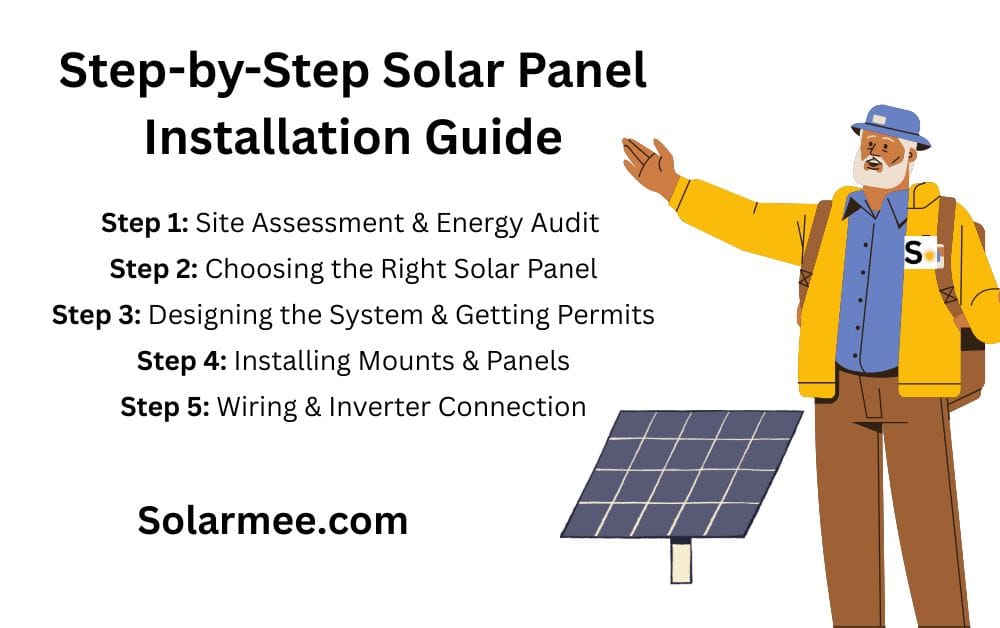
Step-by-Step Solar Panel Installation Guide
Step 1: Site Assessment & Energy Audit
This starts with a site test, which checks the roof, its condition, shading, and structural strength. This can be used to learn whether or not the roof can carry the solar panels and whether they can support the system. In conjunction with this, an energy audit analyzes the amount of energy that you are currently consuming in your home to determine the number of panels and the size of your system that you will require. This will make sure that the system will be tailored to fit your roof and energy needs in the Victorian climate.
Step 2: Choosing the Right Solar Panel
The second step is to choose the kind of solar panel. These are primarily monocrystalline, polycrystalline, and thin-film ones. Monocrystalline panels tend to be the most effective and are appropriate to the changing nature of the Victoria climate due to their ability to work better in cooler weather and partial shade.
Polycrystalline panels are cheaper and tend to be marginally less efficient. Thin-film panels are lightweight and flexible, but are not popular with households. The selection of panels that are the best will be based on your budget, roof space, and energy objectives.
Step 3: Designing the System & Getting Permits
It is now a designed system, where the number of panels to be used, the size and type of inverter (and battery backup) are determined. This design will capture the maximum energy and utilize it. In order to meet Victoria’s construction and electrical codes, local government council clearances and licenses are needed before installation. This documentation is essential to provide a legal and safe installation.
Step 4: Installing Mounts & Panels
Mounts or racks are firmly attached to the roof and customized according to the type of roof material and pitch. Panels in Victoria are preferably placed facing north to maximize the amount of sun and the energy generation. These structures are then fitted with the panels, and installers make sure that the angle and space between the panels are adequate to achieve maximum performance and functionality during the local weather conditions.
Step 5: Wiring & Inverter Connection
After the installation of the panels, electrical wiring is then installed to integrate the panels with the inverter, which then converts the DC power produced by the panels into AC power that can be used in your home. The Australian safety standards are followed, hence no electrical hazards.
Step 6: Grid Connection & Testing
Lastly, the system is attached to an electricity grid or a battery storage system. An in-depth inspection is carried out, and a safety check is done by a licensed electrical inspector. Approved after the system is turned on and starts producing electricity. Excess power may be returned to the grid, where it may gain credits under the net metering rule in Victoria.
Costs of Solar Panel Installation in Victoria
A 3kW system costs about 3,950, a 5kW system costs about 5,00,0, and a 10kW system costs about 8,300, none of which includes government rebates. The prices typically cover panels, inverter, mounting, wiring, and installation. The brand of the solar panel that is selected, the complexity of the roof, and the reputation of the installer company affect the costs of the installation. Systems of superior efficiency or features may cost 20-30 percent more.
It is good to quote several installers and see which one has the best price. Generally, the installation price of solar power in Victoria ranges between an average of 3,950 (small solar installations) and 8,330 (large 10kW solar system), depending on the quality and other installation factors. This means that a majority of households will receive it between 4,000 and 8500, according to the dimensions of the system and individual needs.
How to install Solar Panels in Victoria.
- Site Surveillance: The installer inspects the direction, shading, and area of the roof.
- System Design: Choose the system size (e.g., 3kW, 5kW, 10kW) based on the energy requirements.
- Permits & Approvals: Get necessary local council approvals where necessary.
- Install Groundwork paneling: Railings and panels are installed on the roof.
- Electrical Wiring: You will tie the panels to the inverter and the wiring of the house.
- Inverter Installation: Use and connect the inverter to convert DC to AC power.
- System Testing: Check the system and test it to make sure it functions before it is finally connected to the grid.
- Grid Connection/Commissioning: Obtain permission from the energy supplier to begin producing power.
Solar Panel Installation Costs in Victoria
The cost of solar panel installation in Victoria is determined mainly by the size of the system: the popular sizes are 3kW, 5kW, and 10kW. Smaller systems of 3kW systems, which can serve a couple or a small family, range between 3950 and 5000. Medium-sized systems of 5kW are average households, which cost between 5,000 and 6,500. Between 8,000 and 10,000 Bigger 10kW systems are used in larger houses or other types of homes that consume large amounts of energy.
The ultimate price depends on the brand of solar panels, the type of roof (complex roofs are more expensive to install), and the fees and reputation of the company that will perform this installation. High efficiency, premium brand, and system usually cost an extra 20-30% on the price. To achieve the most competitive price, it is prudent to take quotes from various installers and select a system that will cater to the energy requirements of the household, as well as the roof structure.
When researching the area, keywords such as how much does solar panel installation cost and how much is solar power installation can be used, and are some keywords to look at during research.
Maintenance, Insurance & Lifespan of Solar Panels
The average lifespan of solar panels is between 25-30 years, but it greatly varies depending on the conditions of the environment and the maintenance.
They are supposed to be cleaned regularly, say every 6 to 12 months, according to the degree of dust or dirtiness of the place. The loss of efficiency in panels through pollen, bird droppings, and dirt can reduce panel efficiency by 20 percent or more. The cracks, wiring, and inverter functionality should also be inspected because the inverters normally last between 10 and 15 years, and they may require replacement before the panels.
As far as insurance in Victoria is concerned, solar panels are usually included in home insurance policies, although this depends. It is recommended to ask your insurer to make sure that you have panels and that you have accidental damage or causes of weather covered. The panels are often provided with a warranty to guard against defects and wear and tear with time, usually covering close to 25 years of service.
In short, cleaning, regular inspections, professional maintenance after every two years, keeping panels dry, and control of output can be used to increase the life and efficiency. Insurance is a guarantee that when something goes wrong, you can be covered; however, you must negotiate with your provider to make sure that you are not liable for damage or loss.
Choosing the Best Solar Panels & Installers in Victoria
- LG Solar panels: LG is the brand with a reliable reputation for using durable and high-quality panels. Their level of efficiency is high, and the warranty is 25 years. The users love the performance of the car even during the winter and hail season in Melbourne. Nevertheless, LG has just left the solar panel market, and therefore, supply may not be plentiful. Their panels are a high-quality choice that has had a long history in Australia.
- SunPower Solar panels: SunPower has the highest efficiency, with panels turning more than 22 percent of sun rays into electricity. Their Maxeon technology is very sturdy, and because it withstands heat, this is a major factor in the climate of Australia. Their reliability, smooth appearance, and excellent 25-year warranty are highly praised by the customers. They are costlier but a high-performing option.
- Jinko Solar Panels: This is a very famous and inexpensive brand that has strong Australian support. Jinko has Tiger Neo panels with efficiencies up to 22 percent, with much praise for value among money and durability. Yet, cheaper prices also imply that panels are provided by retailers that are not the best-known, which is why the quality of installation is an important aspect. In general, Jinko provides affordable and efficient panels with Australian offices.
- Canadian Solar Panels: Canadian Solar panels are known to be reliable and have good efficiency of about 22, giving good performance when used in diverse conditions such as low light. They are also backed by sound 25-30-year guarantees and prices. The company has a physical office located in Melbourne, which is useful for support. They are reliable and a good general choice for users.
Suggestions on how to select an Approved Installer in Victoria
- Find installers who are accredited by Clean Energy Council (CEC) or Solar Accreditation Australia, who are doing the same accreditation in place of CEC. These certifications guarantee that installers are complying with the safety, competency, and quality requirements.
- Enquire whether the installer has a Class A electrical license registered by Energy Safe Victoria.
- Make sure that the installer is registered by the New Energy Tech Consumer Code (NETCC), which guarantees that there is responsible marketing, a clear contract, and honoring of warranty.
What are the Best Solar Panels in Victoria?
Top solar panels depend on priorities: SunPower has high efficiency and durability, LG has a track record of performance at a premium price (although less available), Jinko is a great value to the low-end customer, and Canadian Solar is a compromise between reliability and affordability. Notably, a qualified and trained installer is essential in order to optimize panel output and durability.
The best way to ensure a good system that meets the Victorian regulations and rebate programs is to choose a certified installer that is either accredited by the Clean Energy Council or Solar Accreditation Australia.
Installation of Solar Panels step by step in Victoria.
A solar installer comes to your home to see the location of your roof angle, direction, shading, and structure. They also check on your electricity consumption so that they can determine the most appropriate system size.
- Design and Permitting-The installer decides where your panels, inverter, and wiring will be. They deal with permits to ensure that your setup complies with your local requirements.
- Roof Preparation-Your roof is fixed or made stronger in case it was necessary to fix it and hold the solar panels.
- Installation racks can be mounted, and the solar panels are firmly attached. Wiring is used to connect panels to the inverter, which transforms solar energy into household power. When the system is connected to the grid, it is networked to a net meter.
- Testing and Inspection-The system is tested by the installer to ensure that it is working. The local authorities check to ensure that it complies.
- Activation and Monitoring-Once approved, the system is activated. Monitoring software is installed in such a way that you can track the performance of the system and the energy production.
Also Read: Step-by-Step Guide For Solar Panel Installation in Western Australia
Conclusion
The installation of solar panels in Victoria is a well-known process that is safe, efficient, and compliant. Along with the step-by-step installation code, going solar can save a lot of money in terms of electricity bills and safeguard against increasing energy rates. It also contributes to bettering the environment by employing clean, renewable energy that minimizes carbon emissions. In the long run, when you are independent of energy, your property is worth more, and you are also investing in a sustainable future.
To switch to solar power, it would be advisable to go to a professional installer. Contact solarmee.com today to receive expert advice.

Solarmee.com empowers homeowners, businesses, and installers with clear, expert solar guides, product insights, and Learn how to make smarter solar decisions.